Strategic Positioning and Competitive Analysis: iMBrace vs. OpenClaw in the 2026 Agentic AI Market

The artificial intelligence landscape of 2026 has transitioned from simple conversational interfaces to complex, high-agency autonomous systems known as agents. This evolution has created a significant divide between two primary technological philosophies: enterprise-grade orchestration and decentralized autonomous assistance.
At the forefront of this divergence are iMBrace and OpenClaw. While they are frequently compared in competitive tenders, an exhaustive analysis of their architectures, security protocols, and operational goals reveals that they belong to fundamentally different product categories. iMBrace is a sovereign, human-in-the-loop AI Collaboration Hub designed for regulated industries and scalable business execution. Conversely, OpenClaw is a viral, open-source autonomous agent framework optimized for personal productivity and local system control.
This article provides a definitive comparison of these two systems, designed to equip presales professionals with the technical depth and strategic insights required to navigate the competition.
The Bifurcation of Agentic AI: Categorical Distinctions
The current market is defined by a “great bifurcation” between systems designed for enterprise reliability and those built for individual agency. To understand the competition, one must first recognize that iMBrace and OpenClaw operate on different planes of the AI ecosystem.
iMBrace functions as an Enterprise AI Operating System (OS), providing a centralized layer of governance, integration, and factual grounding. It is a platform for building and managing a workforce of agents that follow strict corporate protocols.
OpenClaw, however, is a ready-to-deploy assistant application that prioritizes time-to-value for the individual user. It is a tool for personal empowerment, often referred to as a “24/7 Jarvis” experience, where the agent has broad permissions to act on behalf of a single user on their local machine.
Categorical Dimension | iMBrace (Enterprise Hub) | OpenClaw (Autonomous Assistant) |
Product Category | AI Collaboration Hub & Orchestration Platform | Autonomous AI Agent Application |
Philosophical Goal | Augmenting human workflows with governance | Achieving proactive, independent task execution |
Target Audience | Fortune 500, Government, Regulated FSI | Developers, Power Users, Small Businesses |
Primary Interface | Centralized Dashboard & Enterprise Messaging | Consumer Chat Apps (WhatsApp/Telegram/Signal) |
Ownership Model | Managed Sovereign Infrastructure | Self-hosted, Local/Private Hardware |
Scalability | Multi-agent collaboration at enterprise scale | Single-instance local automation |
The implications of this categorical difference are profound. For a presales professional, the strategic focus must remain on the concept of “accountability.” In an enterprise setting, an agent that acts without oversight is a liability. iMBrace addresses this by embedding the human in the loop, whereas OpenClaw’s value proposition is built on removing the human from the loop.
iMBrace: The Architecture of Sovereign Governance
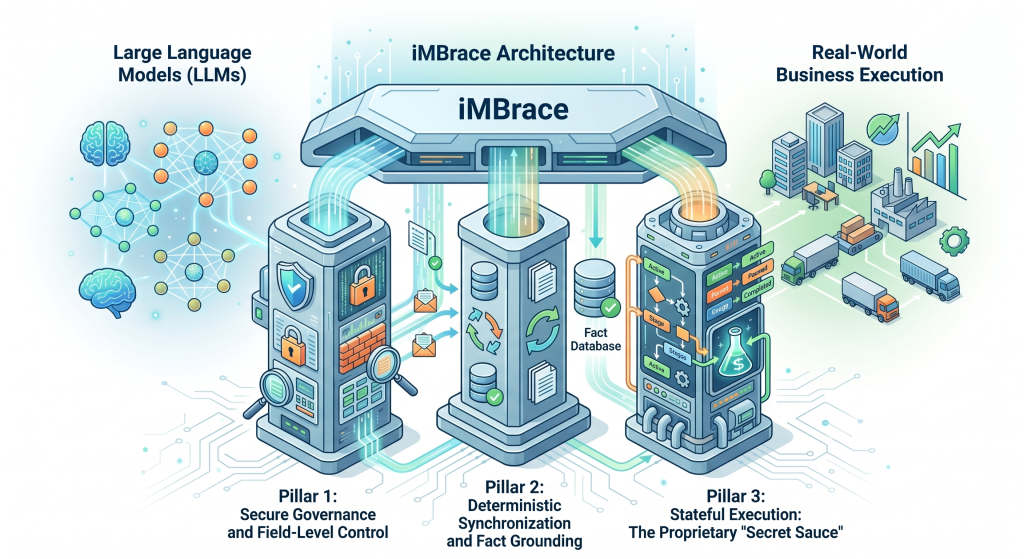
iMBrace is engineered to address the “missing link” between large language models and real-world business execution. Its architecture is built upon three proprietary technological pillars designed to ensure that AI adoption is secure, factual, and manageable.
Secure Governance and Field-Level Control
In regulated environments, traditional security models that apply permissions to entire files or folders are insufficient for AI agents that may ingest vast amounts of data to find a single answer. iMBrace’s “Secure Governance” (patent pending) introduces field-level access control. This means that permissions are managed at the specific data-cell level. When an agent is tasked with a query, the system performs “Dynamic Filtering,” which culls unauthorized data from the AI’s reasoning path in real-time. This prevents the agent from ever “seeing” sensitive information, such as a CEO’s salary in a spreadsheet, even if it has access to the rest of the document.
Furthermore, every interaction within iMBrace is recorded via “Immutable Audit” logs. These encrypted records provide total transparency, allowing a Chief Information Security Officer (CISO) to reconstruct exactly why an agent took a specific action. This level of traceability is a core requirement for SOC 2 compliance and is fundamentally absent in open-source frameworks like OpenClaw, where logs are often stored as local, mutable Markdown files.
Deterministic Synchronization and Fact Grounding
The most common failure point for enterprise AI is “hallucination”—the generation of false but plausible-sounding information. iMBrace eliminates this through “Deterministic Synchronization”. The platform acts as a bridge between communication channels (email/chat) and “Systems of Record” (Salesforce/NetSuite/SQL). By grounding agents in these factual databases, iMBrace ensures that actions are based on current, verified data rather than the static knowledge contained within a pre-trained model. The system supports high-throughput, sub-second execution, bypassing the latency typically associated with complex retrieval-augmented generation (RAG) chains.
Stateful Execution: The Proprietary “Secret Sauce”
Complex business processes often span multiple days, platforms, and human actors. Most AI agents are “stateless,” meaning they forget the context of a conversation or task once the session ends. iMBrace utilizes “Stateful Execution” to solve this problem. Through “Memory Serialization,” the system takes “snapshots” of an agent’s current state, allowing a task to be paused and resumed later without context loss. This is particularly critical for workflows that require human approval. For example, a procurement agent can gather data, draft an order, and then “pause” until a manager approves the purchase, at which point it resumes and completes the transaction.
OpenClaw: The Viral Autonomous Framework
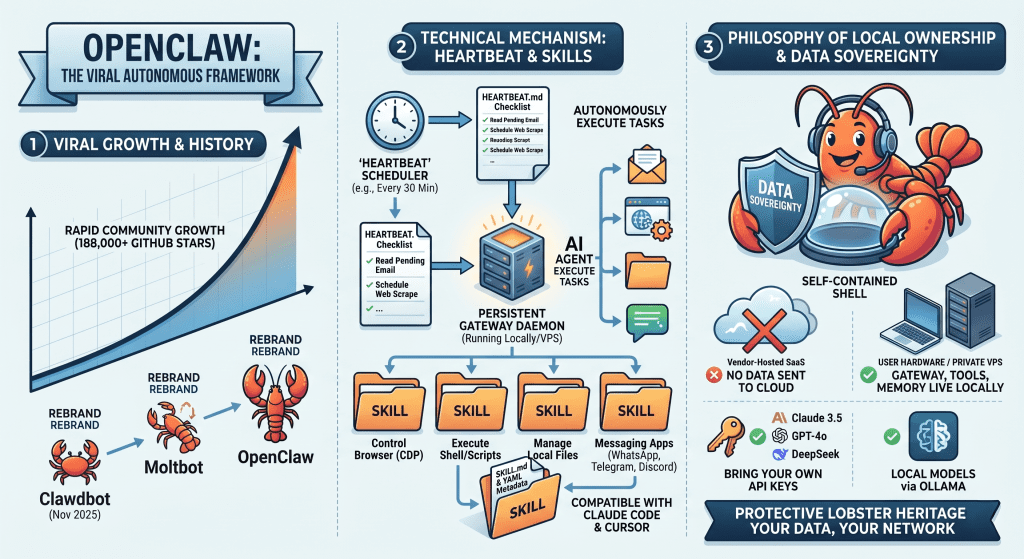
OpenClaw represents the pinnacle of the “high-agency” trend in consumer AI. Originally launched as Clawdbot in November 2025, the project underwent several rebrands—Moltbot and finally OpenClaw—due to trademark concerns and rapid community growth. By early 2026, it had surpassed 188,000 GitHub stars, making it one of the most successful open-source AI projects in history.
Technical Mechanism: Heartbeat and Skills
OpenClaw’s architecture is centered around a persistent gateway daemon that runs on the user’s local machine or a private virtual private server (VPS). Its operation is defined by the “Heartbeat” scheduler. At configured intervals (typically every 30 minutes), the gateway “wakes up” the agent to read a HEARTBEAT.md checklist from its workspace. The agent autonomously decides if any item—such as a pending email or a scheduled web scrape—requires action.
The agent’s capabilities are extended via “Skills,” which are modular directories containing natural language instructions and YAML metadata stored in a SKILL.md file. This format is compatible with other 2026 developer tools like Claude Code and Cursor. Skills allow the agent to:
- Control a browser via Chrome DevTools Protocol (CDP).
- Execute shell commands and run scripts.
- Manage local files and directory structures.
- Communicate through consumer messaging apps like WhatsApp, Telegram, and Discord.
The Philosophy of Local Ownership
The primary value proposition of OpenClaw is “Data Sovereignty”. Because the gateway, tools, and memory live on the user’s hardware, no data is sent to a vendor-hosted SaaS. Users bring their own API keys for models like Claude 3.5, GPT-4o, or DeepSeek, or they can use local models via Ollama to ensure that no data ever leaves their network. This “lobster” heritage (the project’s mascot) emphasizes the idea of a self-contained, protective shell for user data.
Deep-Dive Security Analysis: The Crisis of 2026
While OpenClaw’s high agency provides immense utility, it has also been the source of a systemic security crisis. In early 2026, researchers began uncovering foundational flaws in the “insecure by default” architecture of autonomous agents.
CVE-2026-25253: One-Click Agent Hijacking
The most critical vulnerability discovered in OpenClaw was CVE-2026-25253, a high-severity (CVSS 8.8) remote code execution (RCE) flaw. The vulnerability arose because the OpenClaw gateway bound to localhost by default and exempted local connections from its rate limiter and authentication prompts. Attackers discovered that if a developer running OpenClaw visited a malicious website, JavaScript on that site could open a WebSocket connection to the local gateway.
Once connected, the malicious site could brute-force the gateway password at hundreds of guesses per second—a rate facilitated by the lack of local rate-limiting. Upon guessing the password, the attacker gained full administrative privileges over the agent. This allowed them to:
- Search the user’s Slack and email history for API keys.
- Exfiltrate private files from the local machine.
- Execute arbitrary shell commands on the developer’s workstation.
This “blast radius” problem highlights the danger of running a high-privilege agent on the same machine used for general web browsing.
The “ClawHavoc” Supply Chain Campaign
The OpenClaw ecosystem relies heavily on “ClawHub,” a public repository of community-contributed skills. However, unlike the enterprise-vetted integrations in iMBrace, ClawHub skills are largely unvetted. In March 2026, cybersecurity firm Koi Security conducted an audit of 2,857 ClawHub skills and found that 341 (11.9%) were malicious.
These malicious skills, part of a campaign dubbed “ClawHavoc,” were designed to deliver the “Atomic macOS Stealer” (AMOS). A typical attack involved a skill that performed a useful task—such as summarizing a YouTube video—but silently included a payload that harvested the user’s browser saved passwords, SSH private keys, and .env files containing cloud credentials. Because OpenClaw agents have broad system permissions, these malicious skills could operate with the full authority of the local user.
iMBrace: The Managed Alternative
In contrast to the “Wild West” of open-source skill marketplaces, iMBrace provides a “trusted” AI collaboration hub. Its platform is built on enterprise-grade stability and security, addressing the specific “red flags” identified by researchers in autonomous agents.
Security Metric | iMBrace (Enterprise-Grade) | OpenClaw (Experimental) |
Certification | SOC 2 Type II, HIPAA, GDPR | None (MIT Licensed) |
Data Permissioning | Field-level dynamic filtering | Full file-system access (broad) |
Integrations | Vetted connectors (100+) | Unvetted community skills |
Oversight | Human-in-the-Loop SmartPause | Full autonomous heartbeat |
Vulnerability Fixes | Managed, proactive patching | Manual user updates |
iMBrace’s partnership with NVIDIA further hardens its security posture. By utilizing NVIDIA AI Guardrails, iMBrace can policy-check messages in real-time, preventing prompt injection attacks—where malicious content in an incoming message hijacks the agent’s behavior. This is a “hard defense” that OpenClaw lacks, as the latter often relies on instructions in the system prompt, which are easily bypassed by sophisticated injections.
Operational Comparison: Scaling and Cost
The business value of an AI agent platform is measured by its ability to scale across an organization while maintaining a manageable total cost of ownership (TCO).
The Hidden Costs of OpenClaw
While OpenClaw is free to download, it is not free to operate. The “BYO-Key” model leads to significant “Token Burn”. Because the agent loads the full conversation history and memory files into the context window for every request, the token cost increases exponentially over the life of a session. Furthermore, the “Heartbeat” mechanism is a silent cost driver. Every 30 minutes, even if no user is chatting, the agent sends its context and memory to the model to check its schedule. A “power user” can easily spend $30 to $500 per month on API fees alone, depending on the model chosen and the frequency of tasks.
Operational maintenance is another significant cost. Managing a decentralized fleet of OpenClaw instances requires a high level of technical expertise. A “maintenance nightmare” often occurs as the 430,000-line codebase evolves, requiring manual audits of every updated skill and dependency to avoid supply-chain attacks.
iMBrace: Efficiency through Orchestration
iMBrace is designed for “Scalable Enterprise Execution”. It serves as a centralized platform where a single administrator can manage, monitor, and govern hundreds of agentic workflows. The platform’s ability to orchestrate multi-agent collaboration—where specialized agents for coding, writing, and data analysis work in parallel—reduces the time-to-value for complex projects.
By automating repetitive tasks such as form processing and citizen engagement, iMBrace has been shown to reduce labor costs by up to 40% in some industries. Unlike OpenClaw’s local-only model, iMBrace’s cloud-native architecture allows for “elastic scaling,” meaning it can handle massive surges in demand (e.g., during a public health crisis or a product launch) without requiring manual hardware upgrades.
Strategic Use Cases: Industry-Specific Playbooks
The divergent philosophies of iMBrace and OpenClaw are best illustrated through their real-world applications.
Financial Services (FSI) and Insurance
In the highly regulated FSI sector, iMBrace is the clear market leader. Banks use iMBrace for “AI Messaging Compliance,” ensuring that every client interaction on WhatsApp or WeChat is captured, policy-checked, and stored for audit. Relationship Managers (RMs) utilize iMBrace as a “long-term memory,” providing them with live prompts and auto-summaries during client meetings to ensure consistent, veteran-level service.
OpenClaw is largely excluded from this sector due to its lack of “Immutable Audit” and “Field-Level Access”. A rogue autonomous agent rejecting a mortgage loan or leaking client data due to a prompt injection could cause catastrophic reputational and financial damage.
Government and Public Sector
iMBrace’s “AI Form Reader” and “Inbox Sorting” agents empower government agencies to process citizen applications with greater speed and accuracy. By extracting data from physical forms and routing inquiries to the correct department, iMBrace improves public satisfaction while maintaining SOC 2 compliance. The platform’s “Sovereign AI” deployment options allow government data to remain on-premises or within secure cloud environments, a critical requirement for national security.
OpenClaw has seen some adoption in the public sector in China, particularly for organizing emails and coding tasks, but it has also drawn official warnings from IT ministries regarding potential security risks.
Personal and Developer Productivity
OpenClaw remains the preferred tool for “vibe coding” and personal automation. Its ability to generate a “Morning Daily Digest” of news and tasks, or to serve as a “Content Factory” inside a personal Discord server, makes it highly popular among influencers and developers. For a single user who wants to experiment with the “cutting edge” of autonomous research without corporate oversight, OpenClaw’s flexibility is unmatched.
The iMBrace Battle Card: How to Win
When facing competition from OpenClaw, the iMBrace presales team should focus on the following strategic “win themes.”
Win Theme 1: Accountability and the “Lobster” Problem
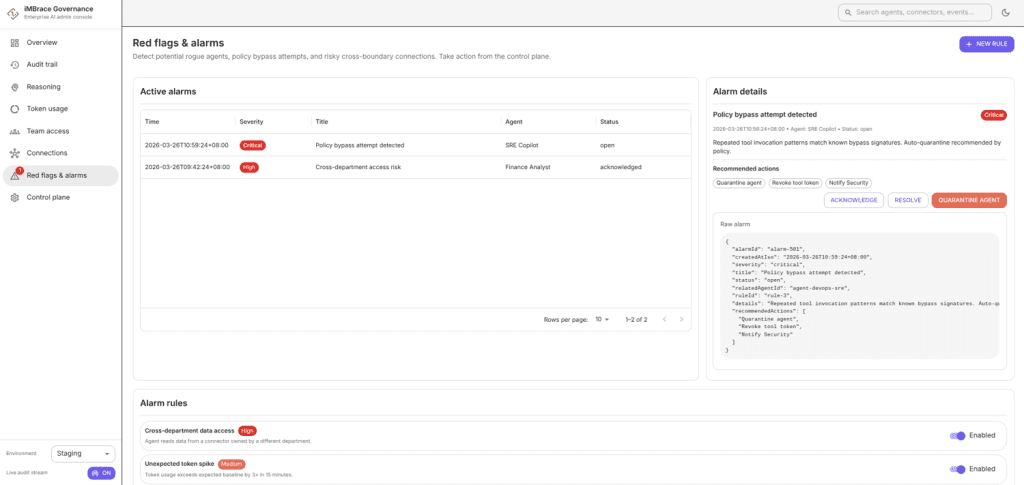
OpenClaw’s mascot is a lobster, representing a self-contained shell. However, in a corporate environment, a shell that cannot be opened by the IT department is a liability. iMBrace should be positioned as the “Transparent Alternative.” While OpenClaw agents are “black boxes” that operate autonomously with minimal monitoring, iMBrace provides technical architectures that monitor agent behavior in real-time and log decision pathways for audit.
Win Theme 2: Hallucination vs. Facts
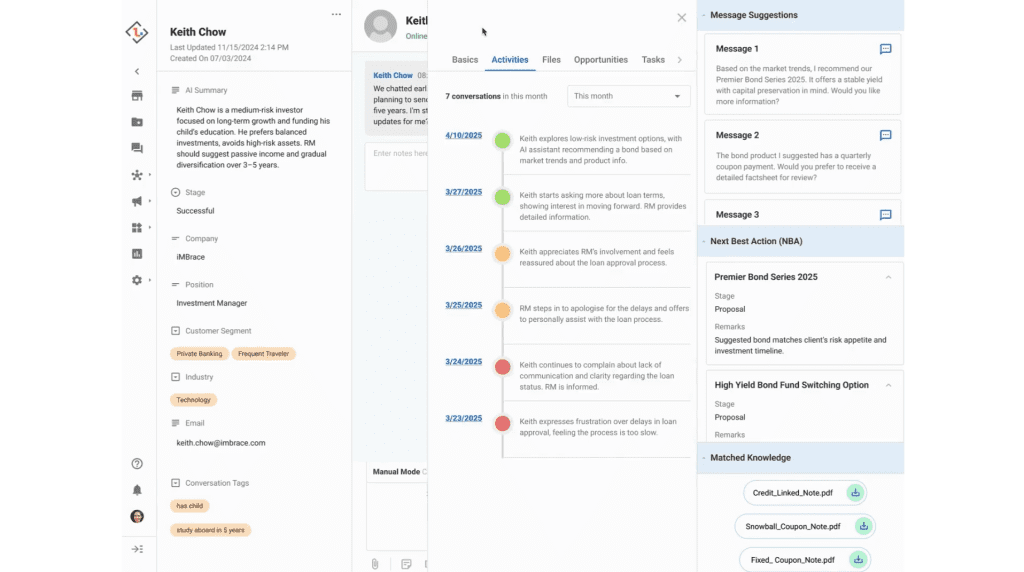
OpenClaw relies on the LLM’s internal memory and local Markdown files. iMBrace uses “Deterministic Synchronization” to ground agents in the “Systems of Record”. In a competitive demo, iMBrace should show how its agent retrieves a specific, real-time value from a CRM or ERP, while an open-source agent might struggle with data that has changed since its last “heartbeat” or memory update.
Win Theme 3: Human-in-the-Loop (SmartPause™)
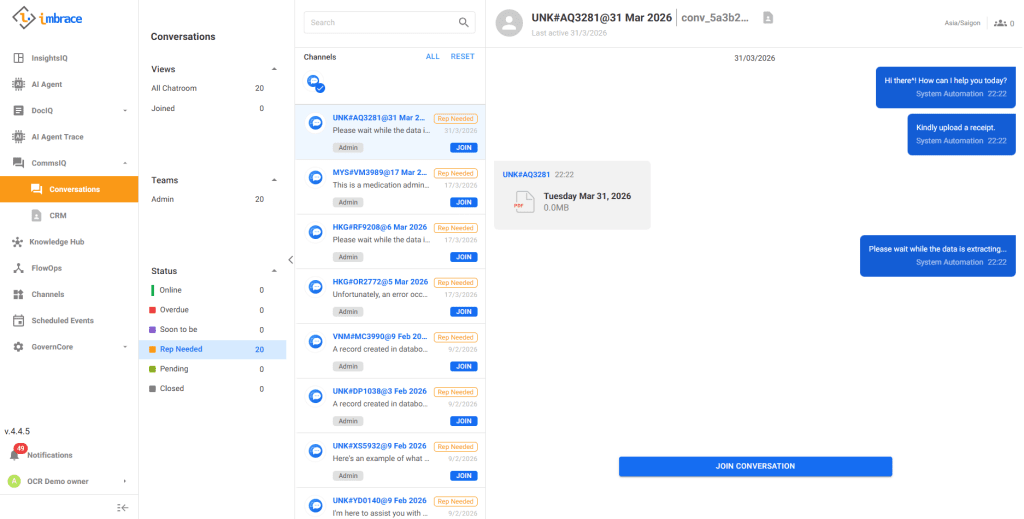
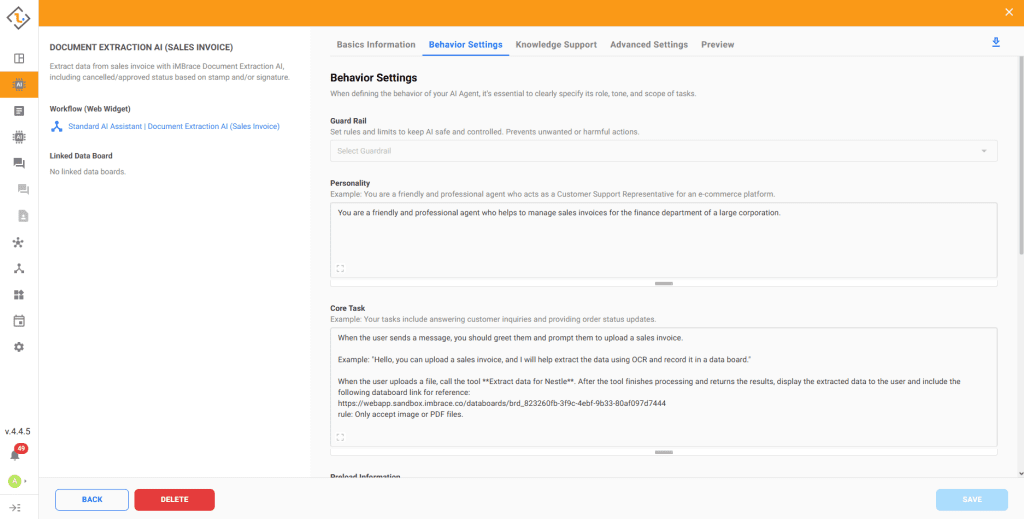
The most compelling feature for risk-averse executives is SmartPause™. The MIT study on “out of control” agents found that the worst possible scenario for an organization is being unable to stop a rogue bot. iMBrace is the only platform that makes human input a core, programmable component of the workflow. The competition should be framed as “Autonomous (OpenClaw) vs. Collaborative (iMBrace).”
Win Theme 4: Partner Confidence
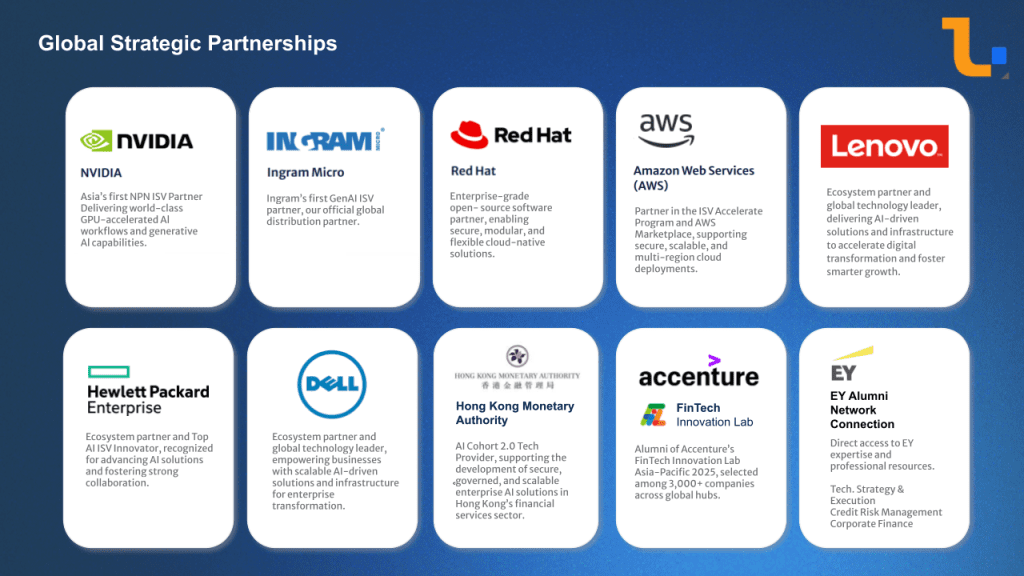
iMBrace’s deep strategic partnerships with NVIDIA, Ingram Micro, and Red Hat provide a “moat” of enterprise trust. While OpenClaw is “someone who just wants to have fun”, according to its founder, iMBrace is “Trusted AI for Real Businesses”. The presales message should emphasize that every single company in the world needs an agentic strategy, and that strategy must be built on a foundation of vetted partners rather than experimental community code.
The Competitive Cost of Inaction
The rapid adoption of OpenClaw has created a “Shadow AI” problem similar to the “Shadow IT” of the previous decade. Employees are already bringing autonomous agents into the workplace because they provide significant productivity gains. Banning these tools is ineffective, as “Shadow AI” guarantees that people will find a way around the ban.
The strategic imperative for the enterprise is to provide an approved, secure, and governed agentic platform. iMBrace is positioned not as a replacement for the idea of OpenClaw, but as the “Enterprise Implementation” of that idea. By adopting iMBrace, organizations can capture the 40% efficiency gains promised by agentic AI while eliminating the 100% risk of workstation compromise associated with unmanaged autonomous frameworks.
From Comparison to Practice: OpenClaw with Governance Webinar
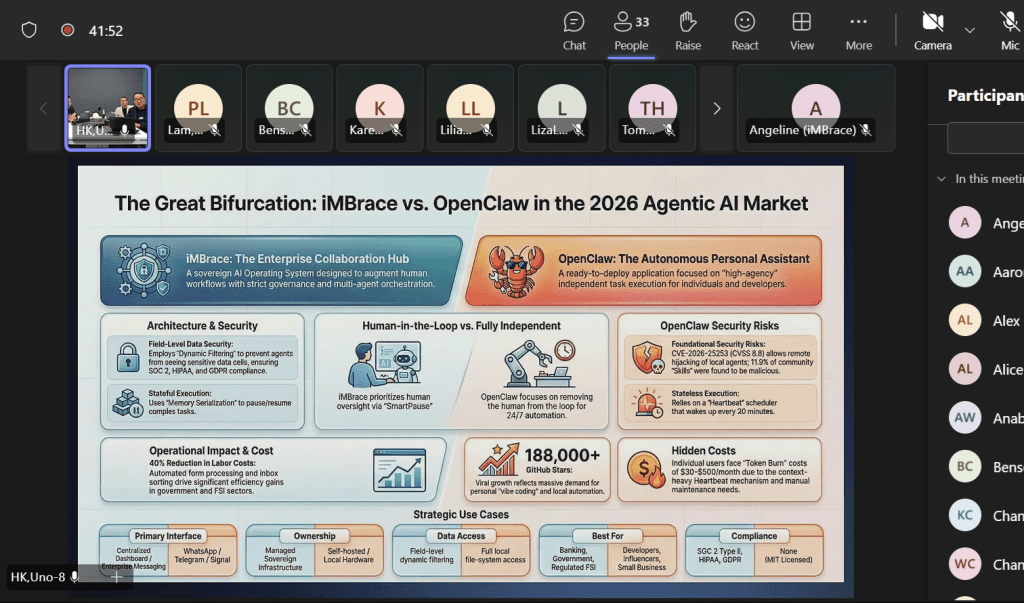
These governance considerations were recently explored during the webinar session “OpenClaw with Governance: A Tech Dream or a Business Reality?”, hosted last week by SoftwareOne, with participation from Amazon Web Services (AWS) and iMBrace.
The session examined the risks of unmonitored autonomous agents and highlighted why enterprises require governed, human-in-the-loop workflows to move from experimentation toward secure, production-ready agentic AI deployment.
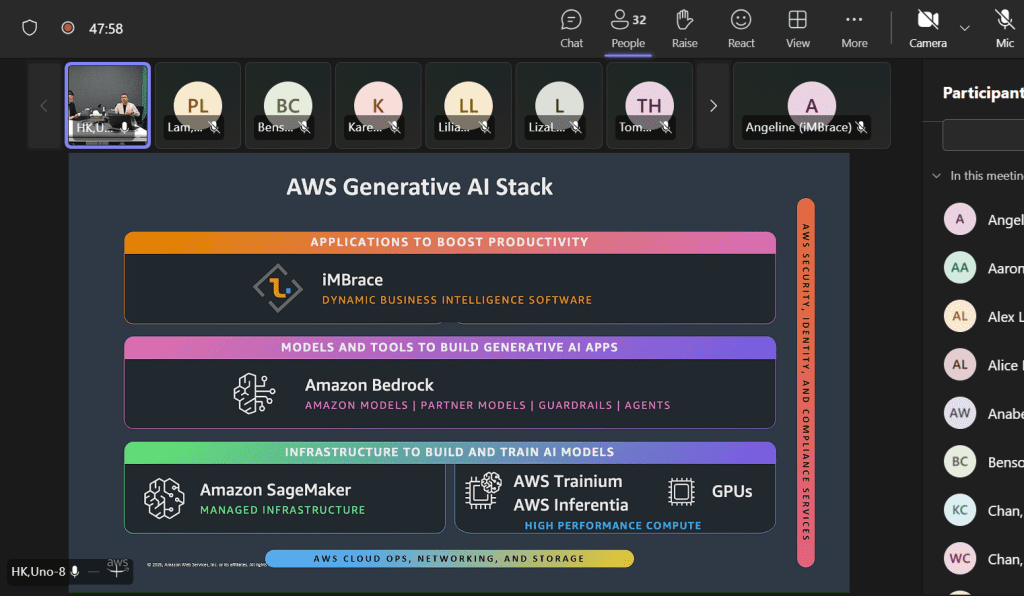
To continue the conversation, SoftwareOne will be hosting a hands-on governed AI workshop this May titled Driving Real-Life Use Cases with AWS Quick Suite and iMBrace. The session will focus on practical enterprise use cases and strategies for operationalizing AI workflows safely at scale.
Final Conclusion: The Road to Agentic Maturity
As we move deeper into 2026, the distinction between “playing with AI” and “running a business on AI” will become even more stark. OpenClaw will continue to be a vital ecosystem for innovation and personal automation, serving as a testbed for new agentic behaviors. However, for the professional peer group of IT leaders and business executives, the requirements of governance, factual accuracy, and human oversight will drive the adoption of platforms like iMBrace.
The “Battle Card” is not about which tool is “better” in a vacuum; it is about which tool is appropriate for the environment. For the individual developer at home, OpenClaw is a dream. For the financial relationship manager, the government clerk, or the corporate marketing team, iMBrace is the sovereign AI OS that makes the “agentic workforce” a safe and scalable reality. In the agentic era, winners make intentional architecture decisions—building the secure, open, and adaptable framework that turns AI pilots into enterprise-wide value.
To learn more about iMBrace’s Governed Journey AI OS, visit http://www.imbrace.co.
Interested in SoftwareOne’s upcoming hands-on workshop? Visit https://www.softwareone.com/zh-hk
Stay tuned for more dynamic and collaborative events in our upcoming Event Highlight.